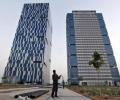
With the government clearing the decks for direct listing at the Gujarat International Finance Tec-City (GIFT City) International Financial Services Centre (IFSC), issuers will wait for the ecosystem to develop further before firming up their listing plans. In the meantime, most companies may continue to prefer listing in the onshore market, even as the new avenue provides key benefits such as tax waivers and reduced foreign exchange risk. Sources said that a few key things need to be ironed out further.

The Securities and Exchange Board of India (Sebi) on Wednesday announced a slew of measures to ease the compliance burden in the stock markets ecosystem, encourage more companies to list on the bourses after reverse flipping to India, and facilitate greater foreign fund flows into government bonds.

The VBL board approved the purchase of SBC Tanzania for Rs 1,304 crore and SBC Beverages Ghana for Rs 127 crore. These own manufacturing/distribution rights for NARTD (PepsiCo branded) beverages in Tanzania and Ghana. The acquisitions will help VBL gain ground in East and West Africa.

Stocks of Indian steel companies are reeling from pricing pressure that is partly blamed on cheap imports. The stocks have declined up to 9 per cent on the NSE in one month, likely allowing investors an opportunity to use the correction to enter the pack as pricing pressure eases. "In steel or any other commodity, if prices or spreads are nearing their bottom, it can be an opportune time to invest in those stocks.

Tata Steel, Bajaj Finance, Mahindra & Mahindra, JSW Steel, NTPC, Adani Ports, Bajaj Finserv and Larsen & Toubro were also among the laggards. However, Power Grid, HCL Technologies, Infosys, Tech Mahindra, Tata Consultancy Services and ICICI Bank were among the gainers.

Life Insurance Corporation (LIC) on Monday said it has an exposure of Rs 36,474.78 crore to Adani group's debt and equity, and the amount is less than one per cent of the national insurer's total investments.

FIIs are looking at the long-term story and initiatives of Indian pharma companies to transform themselves into global entities.

The share of Ahmedabad in the total value of trades on both the BSE and NSE is set to touch double digits for the third year in a row.

'Investors need to be stock specific and should not rush to buy stocks at the current levels.'

Foreign portfolio investors (FPIs) pumped in Rs 1.7 trillion into domestic stocks in 2023, one of the highest net inflows ever witnessed during a calendar year, of which 25 per cent went into the direct buying of stocks. Data provided by depository NSDL revealed that Rs 44,950 crore of the total FPI flows last year went into primary issuances. A large portion of the FPI investments through the stock exchange route went into block deals, thereby reducing the actual investments made via direct buying of stocks. Last year saw selldowns or block deals worth Rs 2 trillion.

From the Sensex pack, Reliance Industries, Bajaj Finserv, HDFC Bank, Adani Ports, Maruti Suzuki India, Axis Bank, Hindustan Unilever, Sun Pharmaceuticals and Asian Paints were among the laggards. Reliance Industries fell the most by 2.38 per cent to close at Rs 1,171.10 apiece.


Among the 30-share Sensex blue-chip pack, Bharti Airtel, ITC, Kotak Mahindra Bank, Hindustan Unilever, Titan, UltraTech Cement, HCL Technologies, and Power Grid, were the biggest gainers. Tata Steel, IndusInd Bank, JSW Steel and Bajaj Finserv were the laggards.

Diwali fireworks are expected to continue on Dalal Street next week, with four companies collectively seeking to mobilise over Rs 6,600 crore through initial public offerings (IPOs). In terms of the amount raised, this is poised to be the busiest week of calendar year 2023. Tata Technologies (Tata Tech), a subsidiary of Tata Motors, could lead the charge with an IPO projected to be over Rs 2,900 crore. This will mark the first maiden share sale by a Tata Group firm in nearly two decades.

Dalal Street had a roller coaster ride in 2024 from shattering record after record to facing heavy correction off-late but equity markets still rewarded investors with positive returns, driven by a surge in domestic fund flows and a resilient macro landscape. The first half of the year saw robust corporate earnings, a surge in domestic flows, and a resilient macro landscape, driving the Nifty to an all-time high of 26,277.35 in September 2024, according to Motilal Oswal Wealth Management.

India's hospitality sector is rolling out the red carpet for investors. A flurry of upcoming IPOs, or initial public offerings, the entry of new players, and ambitious expansion plans by Indian and global hotel brands are ushering in what could be the industry's most formalised era yet. Leading the charge are real estate titans, who are turning their hotel arms into global hospitality chains.

Among the 30 Sensex firms, ICICI Bank, State Bank of India, Axis Bank, Mahindra & Mahindra, Infosys, Larsen & Toubro, Tata Steel, Tata Consultancy Services, Bajaj Finance and Adani Ports were the major laggards. Asian Paints, Hindustan Unilever, UltraTech Cement, Sun Pharma and Reliance Industries were among the gainers.

Movement in the equity market this week will largely be dictated by quarterly earnings of blue-chip firms HDFC Bank and Hindustan Unilever, along with the announcement of WPI inflation data and global trends, analysts said. Trading activity of foreign investors, global oil benchmark Brent crude and rupee-dollar trend would also guide the movement.


From the 30-share Sensex blue-chip pack, Titan, Adani Ports, UltraTech Cement, Tata Consultancy Services, NTPC, Bharti Airtel, Tech Mahindra, Infosys, Hindustan Unilever and JSW Steel were the biggest laggards.

Zomato emerged as the biggest gainer, followed by Reliance, Nestle, Asian Paints and Power Grid.

COVID-19 forced people to work from home turned into the fuel for new demat accounts, observes Debashis Basu.

Pharma major Dr Reddy's Laboratories delivered a muted operational performance in the fourth quarter of financial year 2024-25 (Q4FY25), even as revenue growth remained healthy. Lower gross margin performance and muted domestic growth are key concerns. Most brokerages have a "Sell" or "Reduce" rating as there are uncertainties related to the development of a new product portfolio and the launch timelines.

State Bank of India, Adani Ports, Tata Consultancy Services, ICICI Bank, Reliance Industries and PowerGrid were also among the laggards.

'Even if India is attractive, FPIs currently lack the funds to invest, as money is being redirected to the US.'

'Expect India to keep doing well irrespective of geopolitics.'

Experts expect the trend to continue in the near term.

Among the 30 Sensex firms, Bajaj Finance, Infosys, Adani Ports, JSW Steel, HCL Tech, Bharti Airtel, IndusInd Bank and Tata Motors were the biggest laggards. ICICI Bank, Bajaj Finserv, Titan, Nestle and HDFC Bank were among the gainers.

Investors' wealth on Tuesday jumped by over Rs 2.51 lakh crore, in tandem with a sharp recovery in equities after four days of heavy declines. The 30-share BSE Sensex opened on a weak note and tumbled 581.93 points or 1.10 per cent to 52,260.82 during the day amid firming oil prices and relentless selling by foreign institutional investors. Amid bouts of volatility, the benchmark touched a high of 53,484.26 and a low of 52,260.82 during the trade. It finally settled at 53,424.09, higher by 581.34 points or 1.10 per cent.

After heavy selling in the past two months, foreign investors have staged a strong comeback to Indian equities with a net investment of Rs 24,454 crore in the first week of December amid stabilising global conditions and expectations of potential US Federal Reserve rate cuts. This revival follows significant outflows in the preceding months, with foreign portfolio investors (FPIs) pulling out a net Rs 21,612 crore in November and a massive Rs 94,017 crore in October - the worst monthly outflow on record.

Simplifying GST rates, removing exemptions, easing disputes, and speeding up refunds can boost investment in India and offer the best reply to Trump's tariffs, observes V S Krishnan, former member, Central Board of Indirect Taxes and Customs.

Benchmark Sensex advanced 110 points in a choppy trade on Wednesday, extending its gains to the fourth day in a row helped by buying in HDFC Bank, ICICI Bank and fresh foreign fund inflows. The 30-share barometer rose by 110.58 points or 0.14 per cent to settle at 80,956.33 with 14 of its constituents ending with gains and 16 stocks with losses. During the day, it jumped 399.64 points or 0.49 per cent to 81,245.39 and dipped to a low of 80,630.53.

Stock market investors became poorer by Rs 8.30 lakh crore as equities continued their slide for the sixth consecutive day on Friday. The BSE Sensex has tumbled 1,855.58 points or 3 per cent since February 16. During this period, the combined market capitalisation of BSE-listed firms has tanked Rs 8,30,322.61 crore to reach Rs 2,60,00,662.99 crore. "The domestic market is broadly demonstrating a lack of confidence, registering its sixth consecutive day of losses despite global markets turning green.
A host of macroeconomic data announcements, the last batch of September quarter earnings, global trends, and trading activity of foreign investors will be the major driving factors for the equity market this week, according to analysts. Equity markets would remain closed on Friday for Guru Nanak Jayanti. "India is set to release CPI and IIP data on November 12, with WPI data expected on November 14.

Investors' wealth on Friday tumbled by over Rs 4.65 lakh crore as markets suffered a heavy selloff following weak global trends and continued selling by foreign institutional investors. The 30-share BSE benchmark Sensex plunged 889.40 points or 1.54 per cent to close at 57,011.74. During the day, it tumbled 950.16 points to 56,950.98. The market capitalisation of BSE-listed companies declined by Rs 465,570.82 crore to Rs 2,59,37,277.66 crore amid weak sentiments.

Global factors and FII activity will dictate trends in domestic equity markets this week while assembly poll results of Maharashtra and Jharkhand may impact stocks on Monday, say analysts. Stock markets witnessed a spirited recovery on Friday with benchmark Sensex and Nifty notching the best single-day gains in more than five months and offering relief after weeks of correction.

India's four listed Real Estate Investment Trusts (Reits) collectively distributed 13 per cent more funds to their shareholders in fourth quarter of financial year 2024-25 (Q4FY25) at Rs 1,553 crore on year, reflecting the growing strength of the sector fuelled by strong leasing activity, especially from Global Capability Centres (GCCs).

The NSE Nifty settled the day 28.30 points, or 0.27 per cent, lower at 10,554.30.
Benchmark Sensex bounced back from early lows and closed higher by nearly 376 points on Monday, snapping its four-day losing run following a rally in blue-chips ICICI Bank, HUL and HDFC Bank. The 30-share BSE Sensex rebounded 375.61 points or 0.46 per cent to settle at 81,559.54. The index opened lower and hit a low of 80,895.05 points in early trade.

Stocks of Indian steel companies are reeling from pricing pressure that is partly blamed on cheap imports. The stocks have declined up to 9 per cent on the NSE in one month, likely allowing investors an opportunity to use the correction to enter the pack as pricing pressure eases. "In steel or any other commodity, if prices or spreads are nearing their bottom, it can be an opportune time to invest in those stocks. In India, domestic fundamentals such as steel consumption remain robust, hence one can take fresh positions in these counters," said Amit Dixit, an analyst at ICICI Securities.
